Ujjayi Breathing: Benefits, How to Do Ujjayi Pranayama, Plus Why It’s Called Ocean Breath
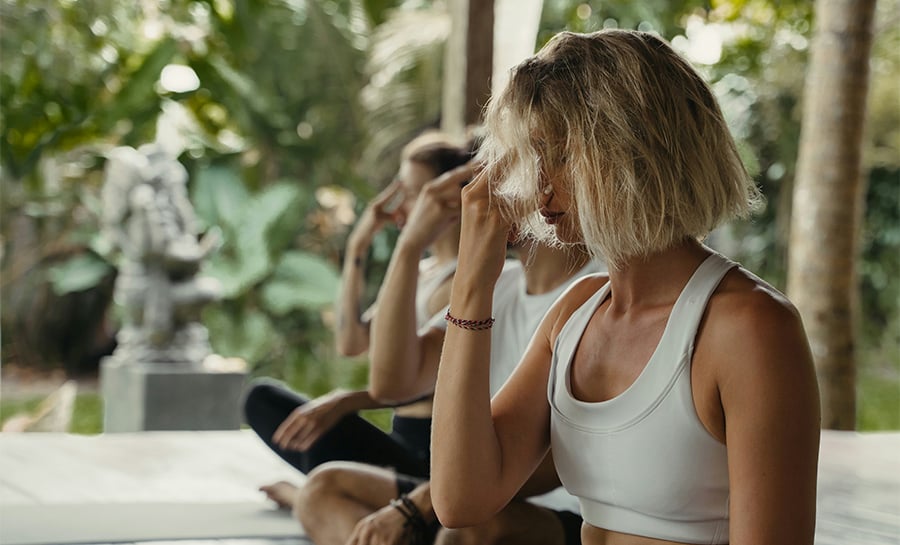
If you’ve ever taken a yoga class and heard the cue to deepen your breath with a soft, ocean-like sound, you’ve likely experienced Ujjayi Breathing.
Also known as Ujjayi Pranayama, this foundational yogic breathing technique is used to steady the mind, regulate the nervous system, and bring awareness to each movement.
The word Ujjayi (pronounced oo-jai) comes from Sanskrit, combining ud, meaning upward or expanding, and ji, meaning to conquer. Combined, it’s often interpreted as “victorious breath” or “one who rises with mastery” (but more on this later).
Whether you’re using it during yoga, in meditation, or throughout your day, this powerful pranayama technique offers a reliable way to reconnect with yourself.
Rooted in ancient yoga traditions, Ujjayi Breathing is often practiced alongside the physical postures, but its benefits extend far beyond the mat.
From reducing stress and anxiety to improving focus and breath control, the Ujjayi pranayama benefits make this one of the most widely practiced breathing techniques in modern yoga.
Simple yet powerful, it’s a practice you can return to anytime you want to feel more grounded, calm, and present.
What Is Ujjayi Breathing?
Ujjayi Breathing is a controlled breathing technique that involves gently constricting the back of the throat while breathing in and out through the nose, creating a soft, audible sound often compared to ocean waves.
This is why it’s commonly referred to as “ocean breath.”
And a breathwork practice with many names means it’s well loved, because you’ll also hear it referred to as “victorious breath” or even “Darth Vader breath”!
In traditional yoga texts, pranayama (breath control) is considered a bridge between the body and mind. In the Yoga Sutras of Patanjali, breath regulation is described as a key practice for calming mental fluctuations and cultivating inner awareness.
Recommended Read: 20 Particularly Relevant Yoga Sutras Translated and Explained
Ujjayi Pranayama, in particular, is used to create a steady, rhythmic breath that supports both physical movement and meditative focus, making it a cornerstone of many yoga styles.
Ujjayi Pranayama Benefits
Read on to learn the many benefits of pranayama breathing.
1. Calms the Nervous System
One of the most well-known Ujjayi pranayama benefits is its ability to activate the parasympathetic nervous system, helping the body shift into a more relaxed state.
Research published in the International Journal of Yoga has shown that slow, controlled breathing techniques can reduce stress markers and support nervous system regulation.
- Reduces stress and anxiety
- Promotes relaxation
- Supports emotional regulation
2. Improves Focus and Mental Clarity
Because Ujjayi Breathing requires attention and control, it naturally anchors your awareness to the present moment.
- Enhances concentration
- Supports mindfulness
- Helps quiet mental chatter
3. Regulates Breath and Increases Lung Capacity
Practicing Ujjayi breathing for beginners can help develop deeper, more controlled breathing patterns over time.
A study in the Journal of Alternative and Complementary Medicine found that pranayama practices can improve respiratory efficiency and lung function.
- Encourages slow, steady breathing
- Improves oxygen exchange
- Builds breath awareness
4. Enhances Yoga Practice
Ujjayi Breathing is commonly used during yoga to link breath with movement, creating a more intentional and fluid experience.
- Supports movement coordination
- Builds internal heat
- Deepens mind-body connection
5. Supports Stress and Anxiety Relief
Using Ujjayi breathing for anxiety can be an effective, accessible way to regulate your stress response in real time.
- Helps downregulate the stress response
- Creates a sense of calm and control
- Can be practiced anywhere
Why This Breath Works
The effectiveness of Ujjayi Breathing comes from a combination of physiological and neurological effects:
- Slowed breath signals safety to the nervous system
- Throat constriction creates resistance, improving breath control
- Audible sound enhances focus and awareness
- Rhythmic breathing regulates heart rate variability
Together, these effects make Ujjayi one of the most effective breathing techniques for relaxation and focus.
Here’s How to Practice Ujjayi Breathing (Step-By-Step Tutorial and YouTube Short)
Follow along with the steps below and/or watch the YouTube short tutorial video to learn how to practice Ujjayi Pranayama for yourself.
- Begin seated or lying down in a comfortable position
- Inhale slowly through your nose
- Gently constrict the back of your throat (as if fogging up a mirror with your mouth closed)
- Exhale through your nose while maintaining that slight throat constriction
- Listen for a soft, ocean-like sound as you breathe
- Keep your breath slow, steady, and controlled
Pro tip:
Start by practicing with your mouth open and act like you’re trying to fog up a mirror so you can feel the throat engagement, then close your mouth and maintain that same sensation of constricting your throat to “fog up the mirror.”
Contraindications and Considerations
While Ujjayi Pranayama is generally safe, keep the following in mind:
- Avoid straining or forcing the breath
- If you feel dizzy, return to natural breathing
- Those with respiratory conditions should consult a healthcare provider
- Keep the breath smooth (not aggressive or overly loud)
Who Is This Practice Best For?
Ujjayi Breathing is especially beneficial if you:
- Experience stress or anxiety
- Want to deepen your yoga practice
- Are learning breath awareness
- Need a simple, effective mindfulness tool
Conclusion
The beauty of Ujjayi Breathing lies in its simplicity and accessibility. With nothing more than your breath, you can begin to shift your state by calming your mind, improving focus, and supporting your overall well-being.
From reducing stress and anxiety to improving focus and breath control, the Ujjayi pranayama benefits make this one of the most widely practiced breathing techniques in modern yoga.
Whether you’re using it during yoga, in meditation, or throughout your day, this powerful pranayama technique offers a reliable way to reconnect with yourself. Like many yogic practices, the impact builds over time, making even a few mindful breaths a meaningful investment in your overall wellbeing.
This article has been read 431 times. Share it and spread the love!


 Ashton Aiden
Don't Miss These











This Month's Letter
From the Editor
Monthly motivation and food for
thought from our founder.

 Jacqlyn Grace Melita